

King
Kings FDM 1000

PETG

68f6f640861ef_

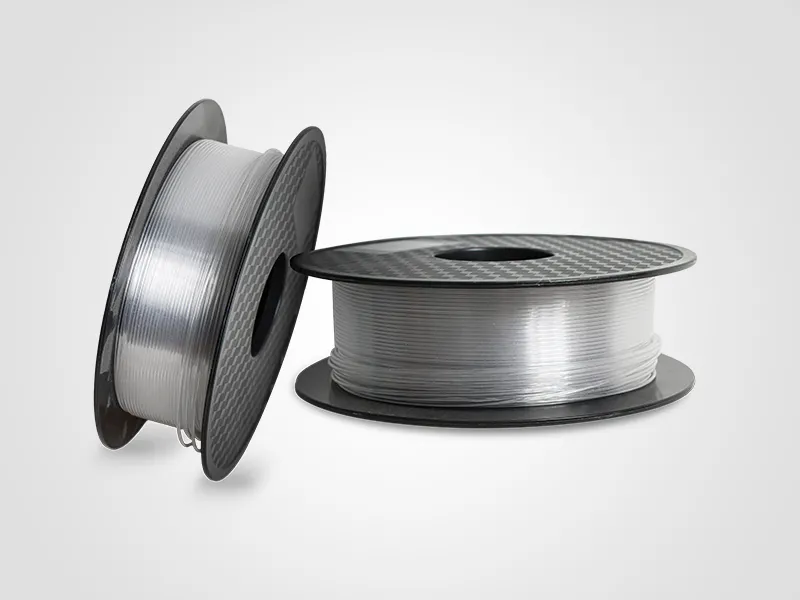
PETG is a thermoplastic material, short for Polyethylene Terephthalate Glycol-modified. It is an amorphous copolyester and part of the transparent plastics family. PETG  is produced by copolymerizing three different monomers.

Overview

PETG is a thermoplastic material, short for Polyethylene Terephthalate Glycol-modified. It is an amorphous copolyester and part of the transparent plastics family. PETG  is produced by copolymerizing three different monomers.

Features

Outstanding hot forming performance

High Toughness

Weathering resistance

Easy processing

Environmental protection

High cost-effectiveness

Excellent chemical resistanc


Advantages

68c27a119b7b7_

Exceptional Printing Precision & Stability

68c27a113665e_

Large-Scale Industrial Capability

68c27a10c45cb_

Advanced Monitoring & Automation

68c27a105f858_

Quiet, High-Speed Performance

PETG polyester chips quality index TDS

Item Units RH-1500C Remark
IntrinsicViscosity dL/g 0.73±0.015 Indicates the size of polymer molecules and its corresponding     mechanical performance. The Viscosity is higher, the mechanical performance is better.
Melting Temp °C 191±2 The product is non-crystalline and has no defined melting point. The melting point is measured by a microscope to obtain themelting temperature.
Carboxyl Group mol/ton ≤35 High terminal carboxyl content will reduce the thermal stability of the product.
Color Value(b-value) / 1±2 b:Yellow color index;  higher values indicate more yellow.
Color Value(L-value) / ≥60 L: Lightness value.
Di-ethylene Glycol % ≤1 Side reactions with Etherification may degrade material durabili- ty and thermal properties.
Moisture content % ≤0.4 Processing can cause polymer degradation due to moisture.
Ash Content % ≤0.08 Ash is used to characterize the content of impurities in polyes- ter, which comes from metal oxides decomposed by catalysts,  raw materials and mechanical impurities generated during the  production process.
Density g/cm³ 1.27
Melt Flow Index g/10min 10±2 Melt flow rate at 210°C with a 2.16kg weight.

Note:
 1. The intrinsic viscosity is a phenol/tetrachloroethane mixed solvent of 3:2, tested at 25°C
 2. This polyester is an amorphous polyester material, and there is no melting peak in the DSC test; therefore, the melting point is tested   by microscopy, and the mid-melting temperature is taken.
 3. This polyester can be widely used in 3D printing consumables, polyester plates, sheets, polyester injection molding, home appliances   and other fields.

Printing Samples